Woo3D
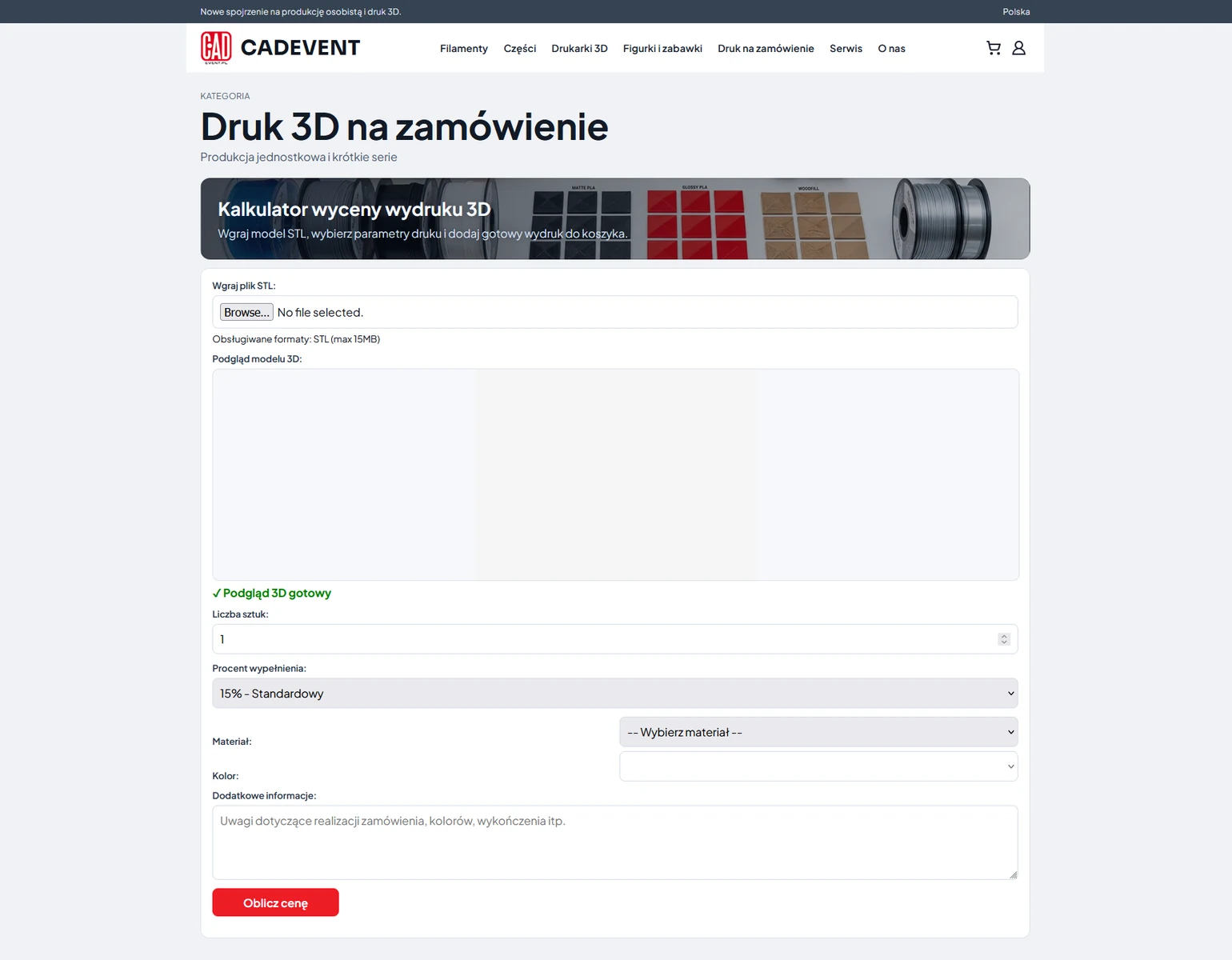
A solo-built WooCommerce plugin that prototypes a guided 3D-print ordering flow. Customers can upload STL files, inspect a Three.js preview, configure material and infill, receive an estimate, and pass order data into WooCommerce. I built this earlier in my development career, before today’s AI coding tools became so capable and widely adopted.
Project facts
- Role
- I translated the commercial quoting process into the product, then built the plugin, calculator, 3D viewer, licensing, and WooCommerce integration.
- Timeline
- Earlier project · Before widespread adoption of today’s AI coding tools
- Team
- Solo project · 1 developer
The Challenge
3D printing service pricing is complex. Each model has a unique volume, different materials cost differently, print time varies with infill and geometry, and machine wear must be factored in. Manual quoting is slow and error-prone, making it hard to offer a seamless online purchase experience.
Key decision
Measure STL volume in the browser with the Three.js viewer so pricing can stay immediate without server-side geometry processing.
Approach
Built a WordPress plugin with a Three.js STL viewer for model preview and browser-side volume extraction. A JavaScript calculator estimates material and machine costs from measured volume, infill, quantity, and configurable printer parameters; it is an estimate rather than a slicer or G-code simulation. WooCommerce hooks create hidden products and carry order metadata through the cart. A Firebase-backed Vercel endpoint verifies optional PRO licences.
Key Highlights
- Three.js STL viewer with volume extraction and print time estimation
- Multi-material pricing engine with volume-based discount tiers
- WooCommerce session-based order flow from upload to checkout
- Admin panel for filament management, printer parameters, and appearance
- Firebase-verified license system for PRO feature gating
- i18n translation system for multilingual frontend labels
Architecture
- WordPress plugin (PHP) with full WooCommerce hook integration
- Three.js with STLLoader for browser-based 3D model rendering
- JavaScript calculator for material cost, machine cost, and discount computation
- Vercel-hosted Firebase license verification API
- Admin settings dashboard with filament, printer, appearance, and license tabs
- WordPress cron task for automated draft product cleanup
Verification
- Source inspection confirms Three.js scene setup, STLLoader parsing, model bounds, and thumbnail generation
- Calculator code derives material and machine estimates from volume, quantity, infill, rates, and printer settings
- PHP hooks persist 3D-print metadata, create WooCommerce products, manage session orders, and schedule draft cleanup
Current limitations
- The repository has no automated tests and is not packaged for the WordPress.org plugin directory
- Print-time output is a simplified estimate, not a slicer or G-code path simulation
- PRO operation depends on an external Firebase and Vercel licence service
- The examined source snapshot contains a duplicate PHP method declaration that must be removed before treating it as release-ready
Outcome
A substantial source prototype covering browser-side STL analysis, pricing, WordPress administration, and WooCommerce order metadata. The repository still needs the duplicate declaration fixed and automated tests before it can be described as release-ready.
Inside the product