IDA
IDA is a family business in Władysławowo that has made salted and marinated herring for wholesale buyers since 1995. The project has two parts. The public website idaryby.pl is online as a simple first version that lets a wholesaler put together an inquiry. The panel at produkcja.idaryby.pl records production batches against recipes instead of in spreadsheets. It started as a demo that saved operations in the browser. It now has a shared API and a database on Cloudflare D1, with a separate production database prepared for the plant.
Project facts
- Role
- Design, copy, implementation and deployment of both parts.
- Timeline
- October–November 2026 · website online, panel getting ready for production
- Team
- Solo project · working with the plant owners
How it works
From inquiry to a reconciled batch
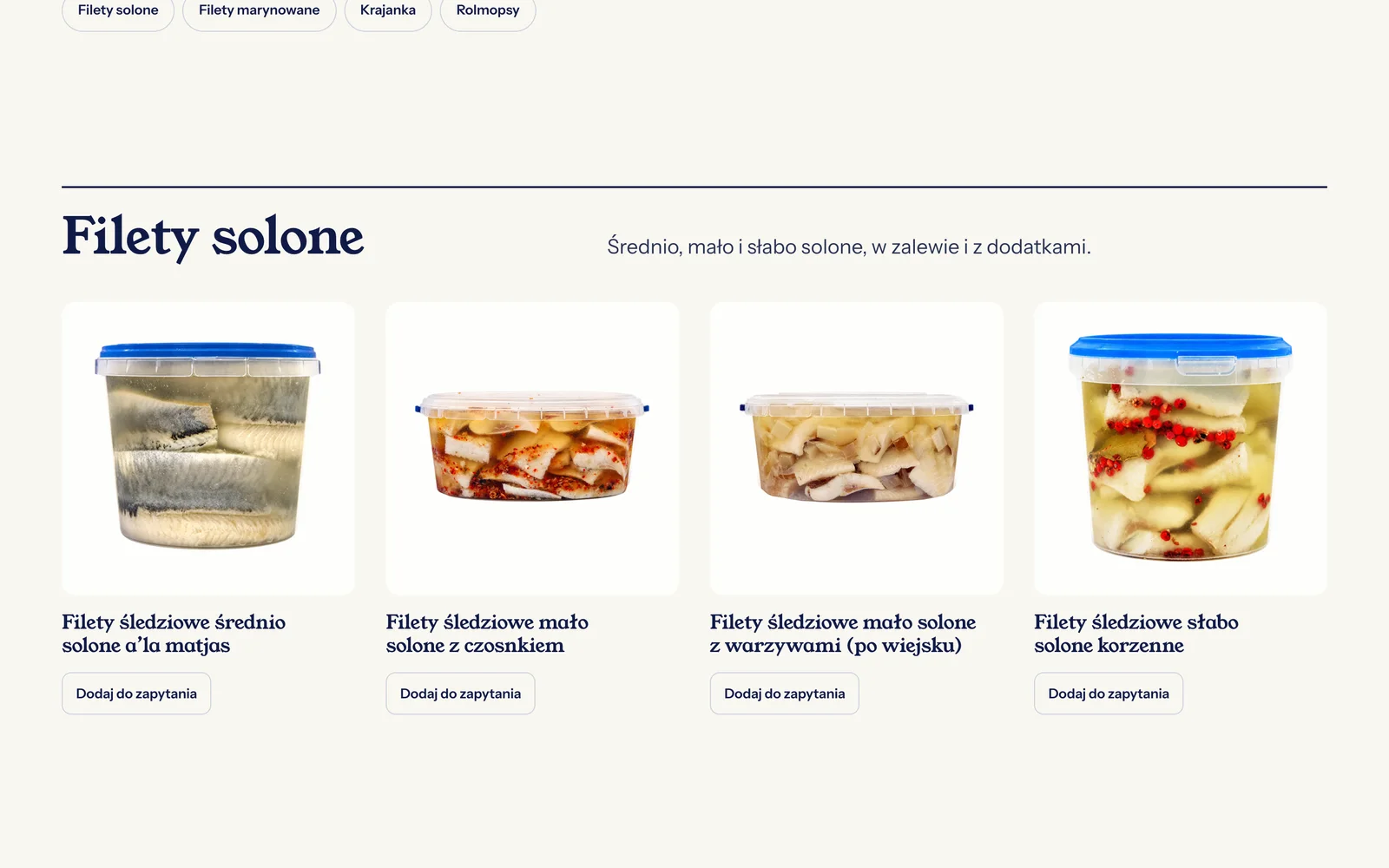
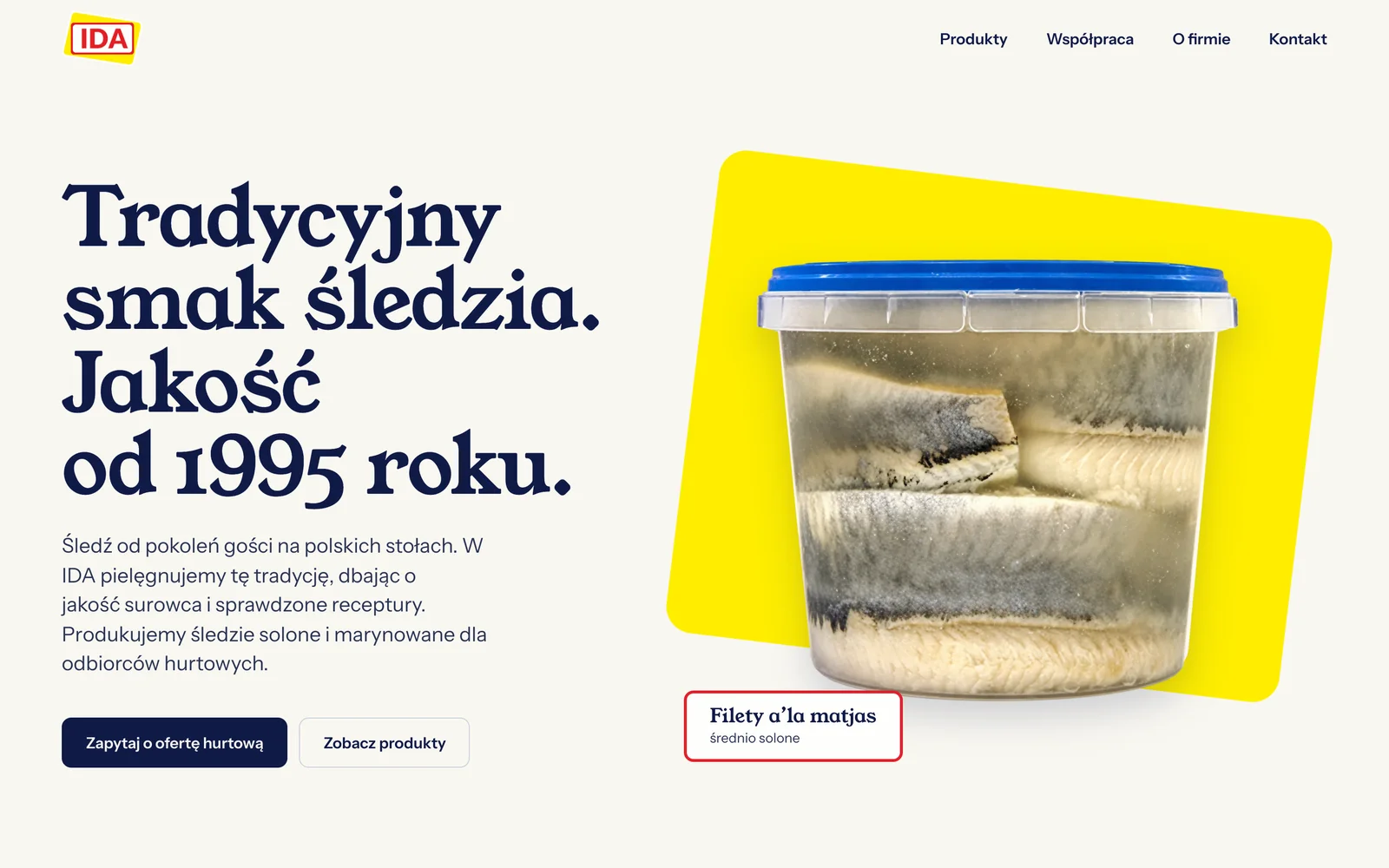
- CatalogueA wholesaler browses 12 products on idaryby.pl
- InquirySelected products become a ready email or a phone call
- RecipeIn the panel, a worker picks a product and pack size
- ReconcileNorms × quantity, actual usage and shortage checks
- StockOne operation consumes materials and adds the product
Two parts of one project: the website collects inquiries, the panel reconciles production.
Problem
The plant sells to wholesalers, shops and chains that call or email with a specific product list. The website had to show 12 products, make the producer credible and lead to an inquiry, or on a phone, simply to a call. Inside the plant, production was reconciled by hand across spreadsheets: 72 materials and packaging items, 84 products and 83 recipes. That makes it easy to get usage or stock wrong.
Key decision
The website started as a deliberately simple mockup: plain HTML, CSS and JavaScript, so the content, the 12-product catalogue and the inquiry flow could be agreed with the owners before investing in a bigger build. The next version will move to React, the same stack as the panel. The production panel is a separate app behind Cloudflare Access. Its starting data comes from the plant’s own spreadsheets, and it calculates in integers so grams are not lost to rounding. Once the demo had proved the screens, I moved it to a shared database so the whole plant works on one set of stock figures.
How I built it
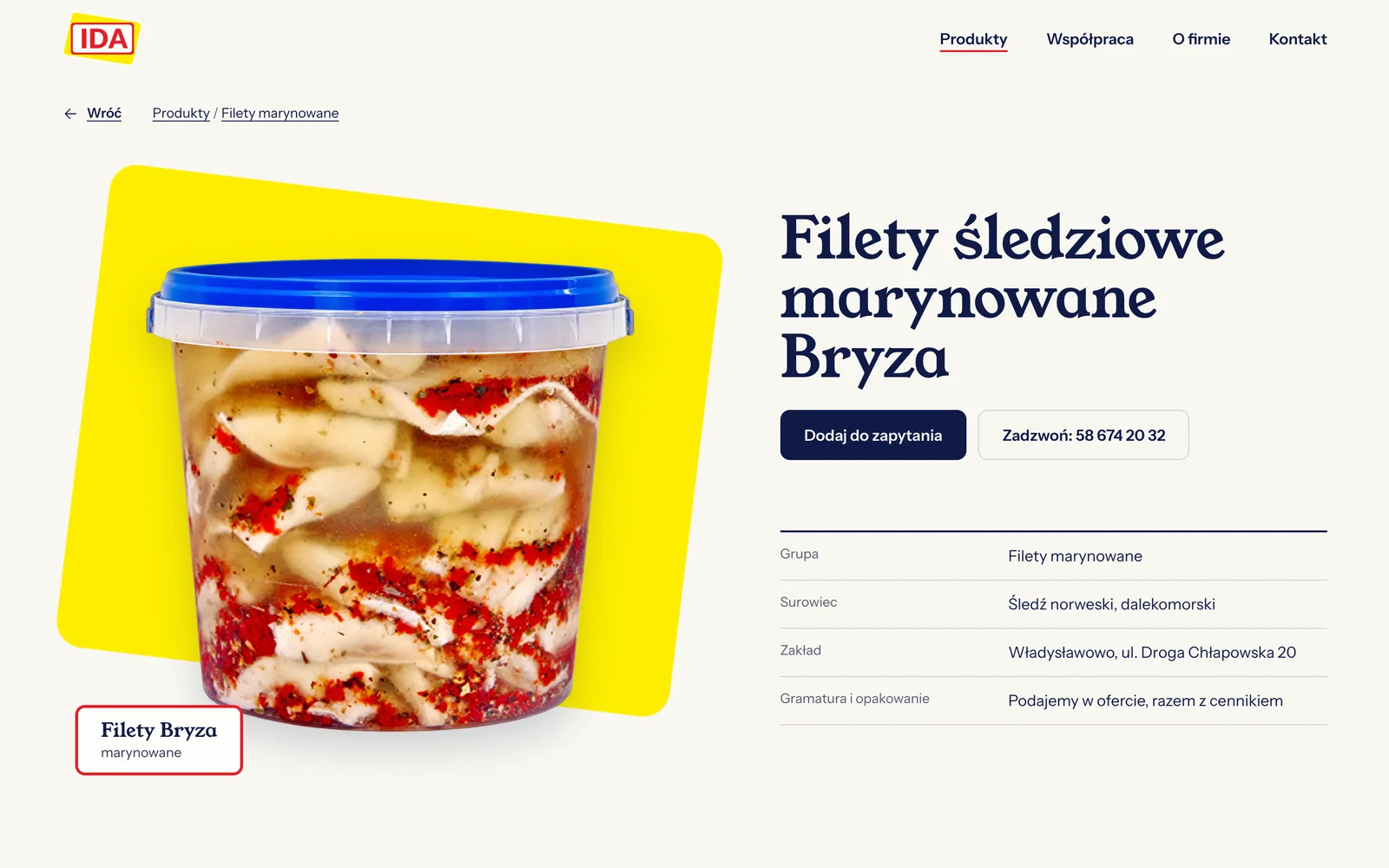
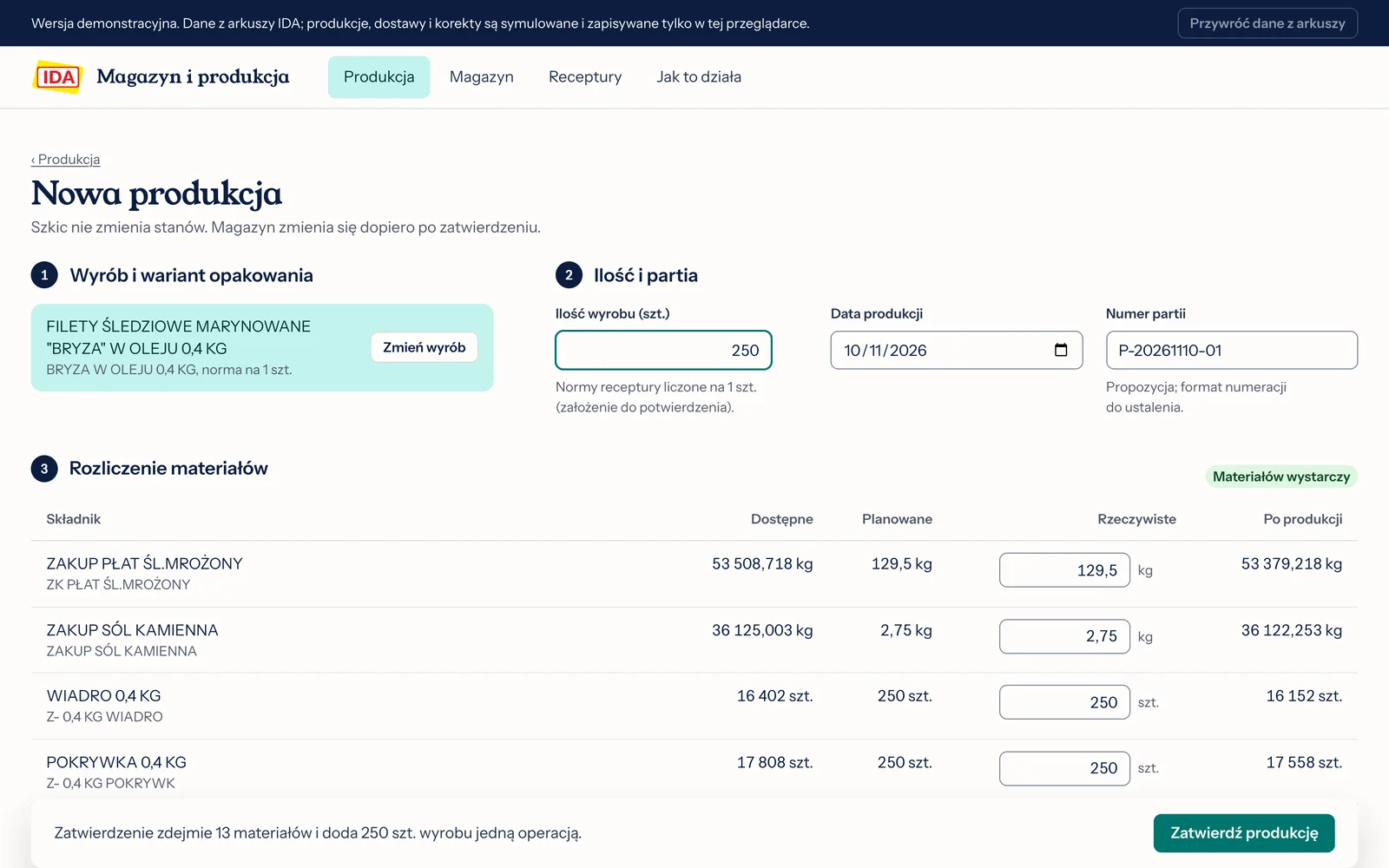
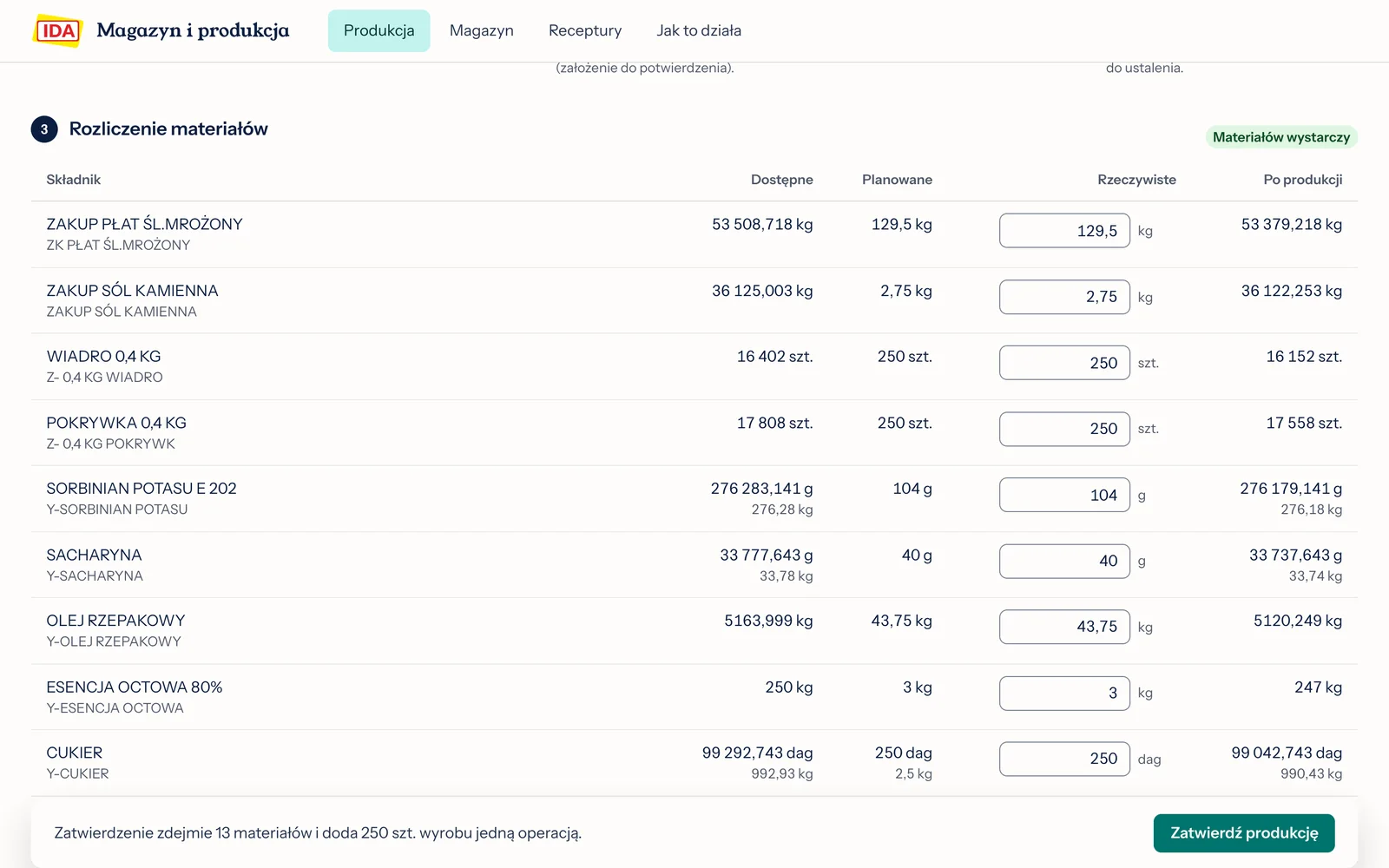
Each of the 12 products has its own page, built from one shared product list. The wholesale inquiry collects products in the browser and prepares a ready-to-send email in the visitor’s mail app. It survives the back button and changes made in another tab. On mobile, the main action is calling the plant. In the panel, a worker picks a product and pack size and enters a quantity. The app multiplies the recipe norms, shows each ingredient’s stock before and after the batch, and blocks approval when something is short or a changed amount has no reason given. The same data also covers trade sales and a Costs tab with purchase prices and the material cost of each product.
Highlights
- A 12-product catalogue with a page for every product.
- A wholesale inquiry collected in the browser and turned into a ready-to-send email.
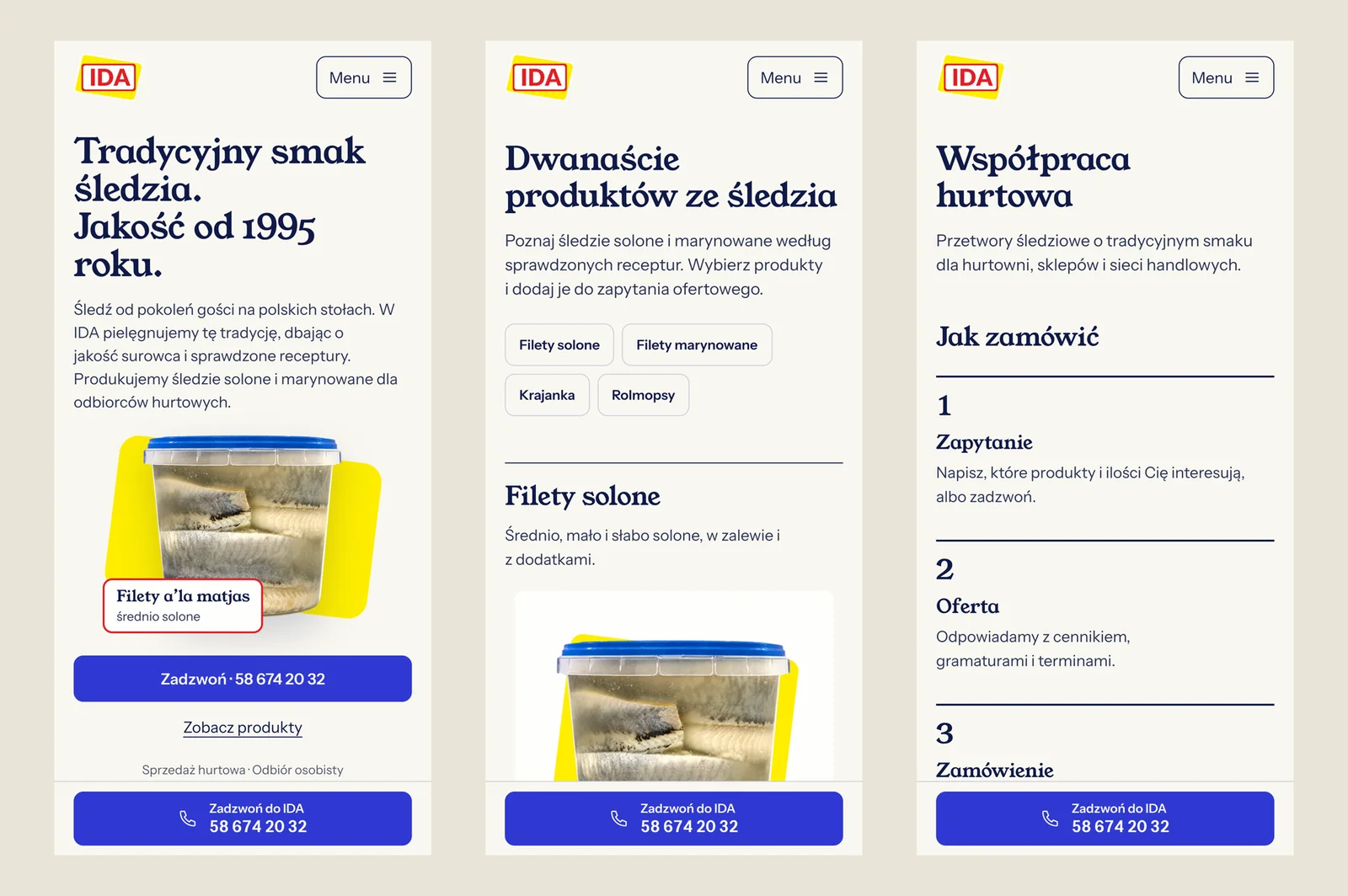
- A mobile layout built around calling the plant, with single-column navigation.
- Batch reconciliation: norms × quantity, actual usage with a reason for changes, and a preview of stock after production.
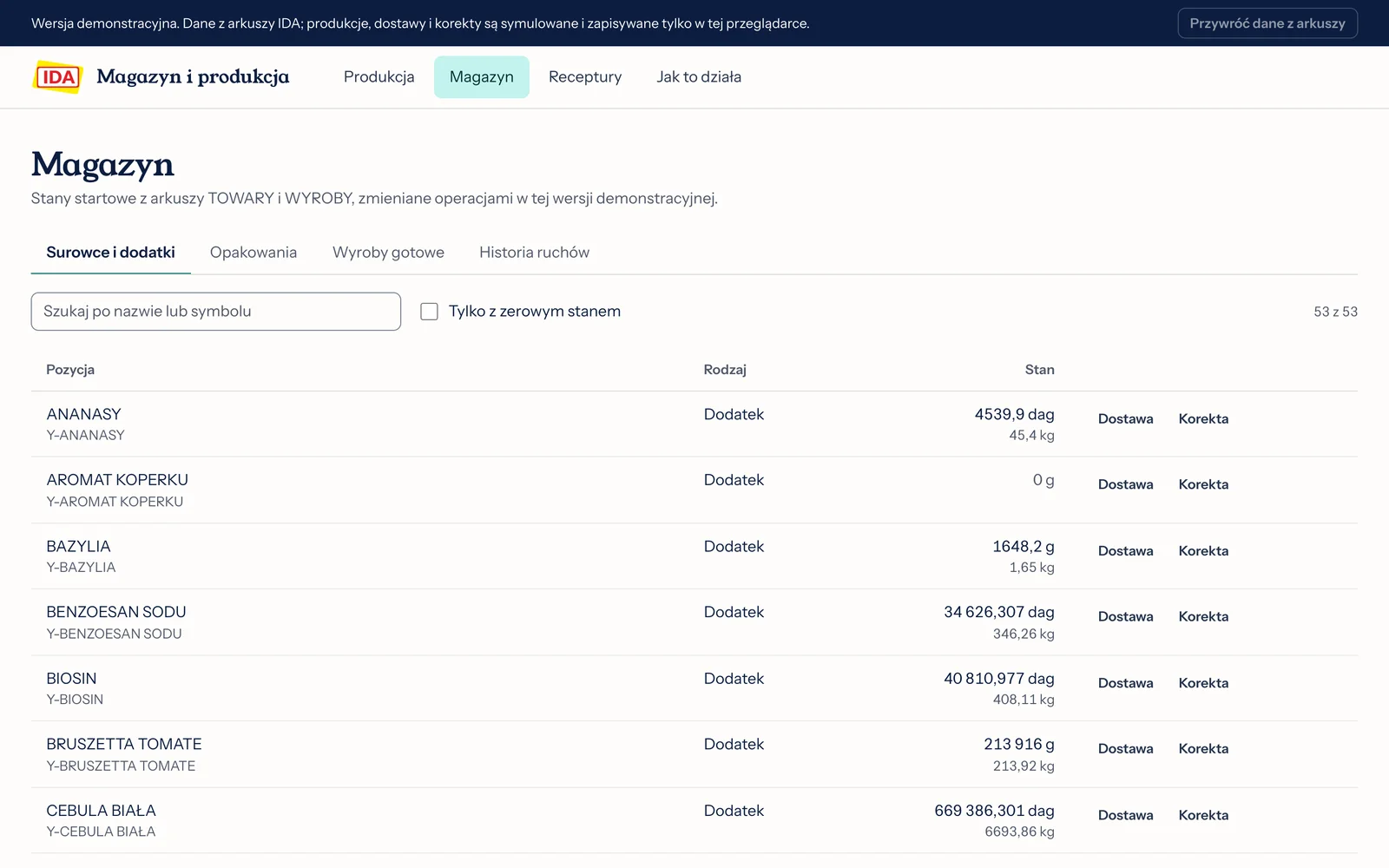
- Stock with deliveries, corrections and movement history. Cancelling a batch records a reversing entry instead of deleting history.
- Recipes with unclear source data are flagged “To review” and blocked from production.
- A shared D1 database behind an API: stock is an append-only journal, recipes and item cards are versioned, and every write records who made it.
- A Costs tab: purchase prices stored exactly as integers, and the material cost of each product calculated from its current recipe.
Architecture
- Website (current version): a lightweight mockup in plain HTML, CSS and JavaScript. Planned rebuild in React.
- Website hosting: Cloudflare Workers with a preview deployment for every pull request.
- Panel: React 19, TypeScript and Vite. Quantity, catalogue and stock logic are pure functions covered by Vitest.
- Panel data: Cloudflare D1 with SQL migrations. Production and test run on separate databases, and the Worker refuses to start if it is pointed at the wrong one.
- Panel access: a Worker checks the Cloudflare Access token before serving any file, and only approved email addresses can sign in.
- Starting panel data is extracted from the plant’s XLSX files by a read-only script. Batch scripts import production and sales history through the same approval logic as the app.
How it was checked
- Inquiry tests cover invalid and blocked browser storage, returning through history, and changes made in a second tab.
- Vitest covers the stock and production logic, plus a UI scenario for a new batch.
- The database layer is tested on a local D1: migrations on fresh and populated databases, concurrent identical requests, and a verified backup and restore.
- A separate test environment with its own database and Access application runs the real API with a scheduled health check for stock balances.
- Production deployment is manual and gated, with a guard against publishing without Cloudflare Access.
Limitations
- The website is a simple first version. The full rebuild in React is still ahead.
- The inquiry form prepares an email in the visitor’s mail app. It does not send it on its own.
- The production database is prepared but not yet filled with the plant’s real opening stock, so the panel is not used for day-to-day production yet.
- Encrypted off-site backups and failure alerts are still to be set up before launch.
- Only approved plant accounts can open the panel, so it is shown here through screenshots.
Outcome
The website is online and takes a wholesaler from the catalogue to an inquiry or a call. The panel shows that reconciling a batch fits on one screen instead of several spreadsheets, and it now runs on a shared database and API. What remains before the plant relies on it is loading the real opening stock and finishing backups.
Screenshots